Accommodation


Duration

Accommodation

Maximum Altitude

Difficulty Level

Best season

Tour type

Meals

Group Size

Age Limit
The Panikhar to Warwan Valley trek is a rare Himalayan crossover that lets you experience two completely different worlds in one continuous journey. Starting from the remote village of Panikhar in the Kargil region, the trail gradually leaves behind signs of civilization and leads you deep into raw mountain terrain — glaciers, alpine lakes, high passes, and endless grasslands.
As the trek progresses, the landscape constantly transforms. You begin in the dramatic, rugged setting of Ladakh and slowly transition into the softer, greener valleys of Kashmir. The shift is not just geographical but visual and emotional — from barren slopes and icy streams to wide meadows, grazing horses, and welcoming mountain villages.
This trek is ideal for experienced trekkers looking for something offbeat, less crowded, and truly immersive. It combines adventure, natural beauty, and cultural encounters in one unforgettable Himalayan expedition.
1. A Dramatic Landscape Transition
Witness the striking contrast between Ladakh’s dry, high-altitude terrain and
Kashmir’s lush green valleys — a rare visual experience on a single trek.
2. High-Altitude Glacial Experience
Walk across moraines and glacier sections, visit partially frozen alpine lakes,
and experience the thrill of traversing icy terrain in a remote Himalayan
setting.
3. Pristine Campsites
Camp beside river confluences, clear mountain streams, vast meadows, and wide
alpine valleys far from roads or settlements.
4. Untouched & Less Explored Route
Unlike commercial trekking circuits, this trail remains quiet and raw, offering
solitude and a deeper connection with nature.
5. Icy Stream Crossings
Start your mornings crossing fresh glacial streams — cold, refreshing, and part
of the true mountain experience.
6. Expansive Grasslands & Shepherd Trails
Walk through endless meadows dotted with wildflowers, grazing horses, and
occasional nomadic shepherd camps.
7. Cultural Immersion in Warwan Valley
End the journey in traditional mountain villages where life is simple and
authentic — wooden homes, terraced fields, and warm local hospitality.
8. Physical & Mental Challenge
With one long glacier-crossing day and steady altitude gain, the trek pushes
your endurance while remaining non-technical.
₹45000/ Person Srinagar to Srinagar |
Detailed Trek Plan
Srinagar to Panikhar
After breakfast start drive towards Panikhar .on the way u can see the lot of places like sonmarg, zojila , Gateway of ladakh, Drass, Kargil war memorial and finally reach via reach kargil village. Panikhar.A small village & Fields. Glaciers hanging far above. Facilities are basic so whatever you needed you should’ve bought it earlier. Night settles fast here overnight stay in tents.
Acclimitize Day & Explore Panikhar.
Before doing any high altitude trek we need to acclimitize ourself first.Panikhar is actually a calm and beautiful village of kargil district its famous for its snow capped moutains & and lush green fields. You will see the people here they are busy with their farming .
Panikhar to Sumdo / Denora
The trek begins near Panikhar, walking alongside a beautiful mountain stream. Soon after leaving the village, you cross a small bridge and step into a completely different world. Within minutes, all signs of civilization fade away and you are surrounded by raw Himalayan terrain.The trail is wide and the climb is gentle, making it a comfortable start. The river keeps flowing beside you, adding a calming rhythm to the walk. As you continue, the scenery slowly changes patches of green appear, small streams cut across the meadows, and sometimes you may spot temporary shepherd camps along the way.By late afternoon, you reach Sumdo, where two rivers meet. The campsite is peaceful and scenic, surrounded by mountains, open grasslands, and the soothing sound of flowing water.
Sumdo to Kalapari
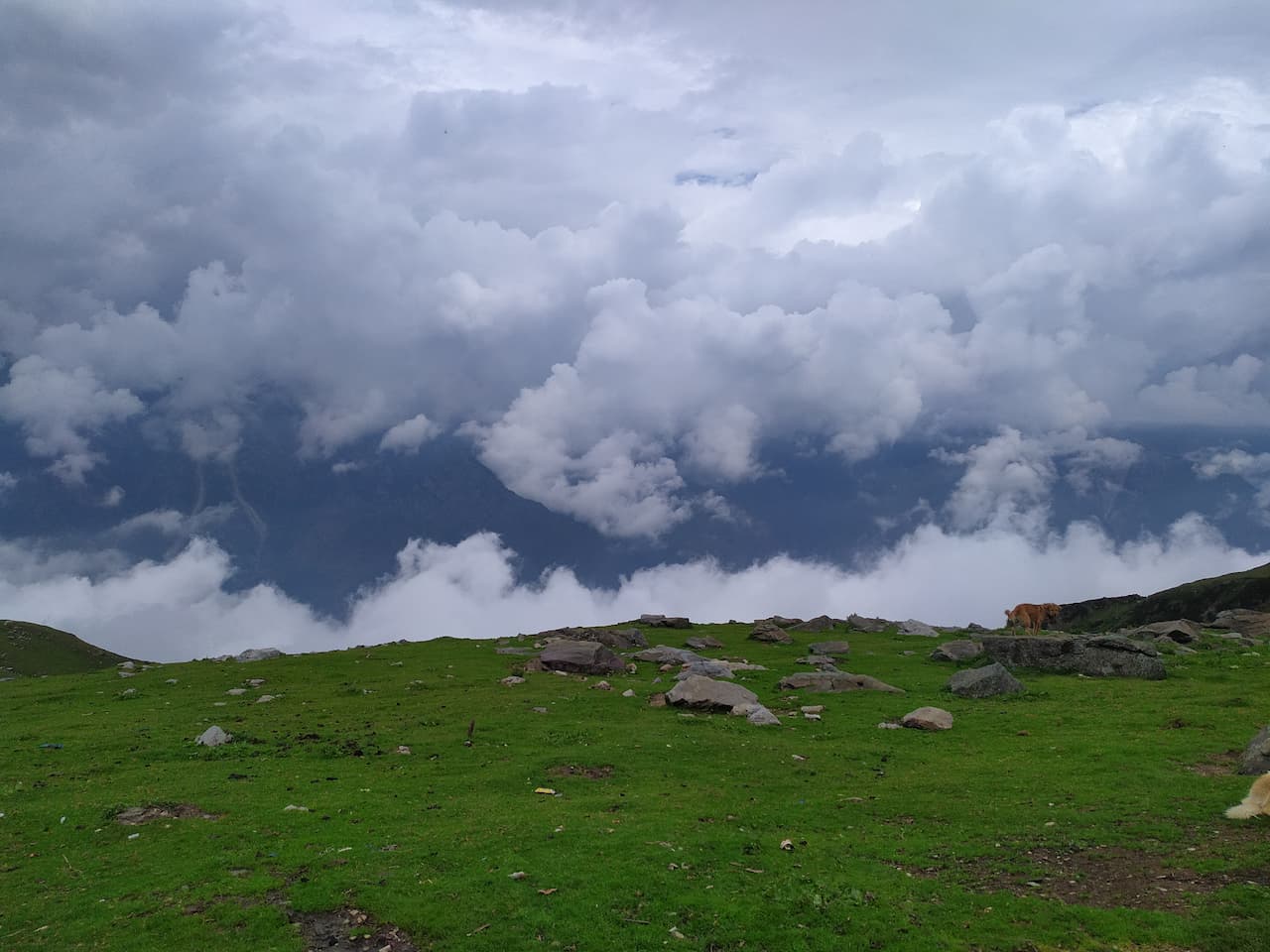
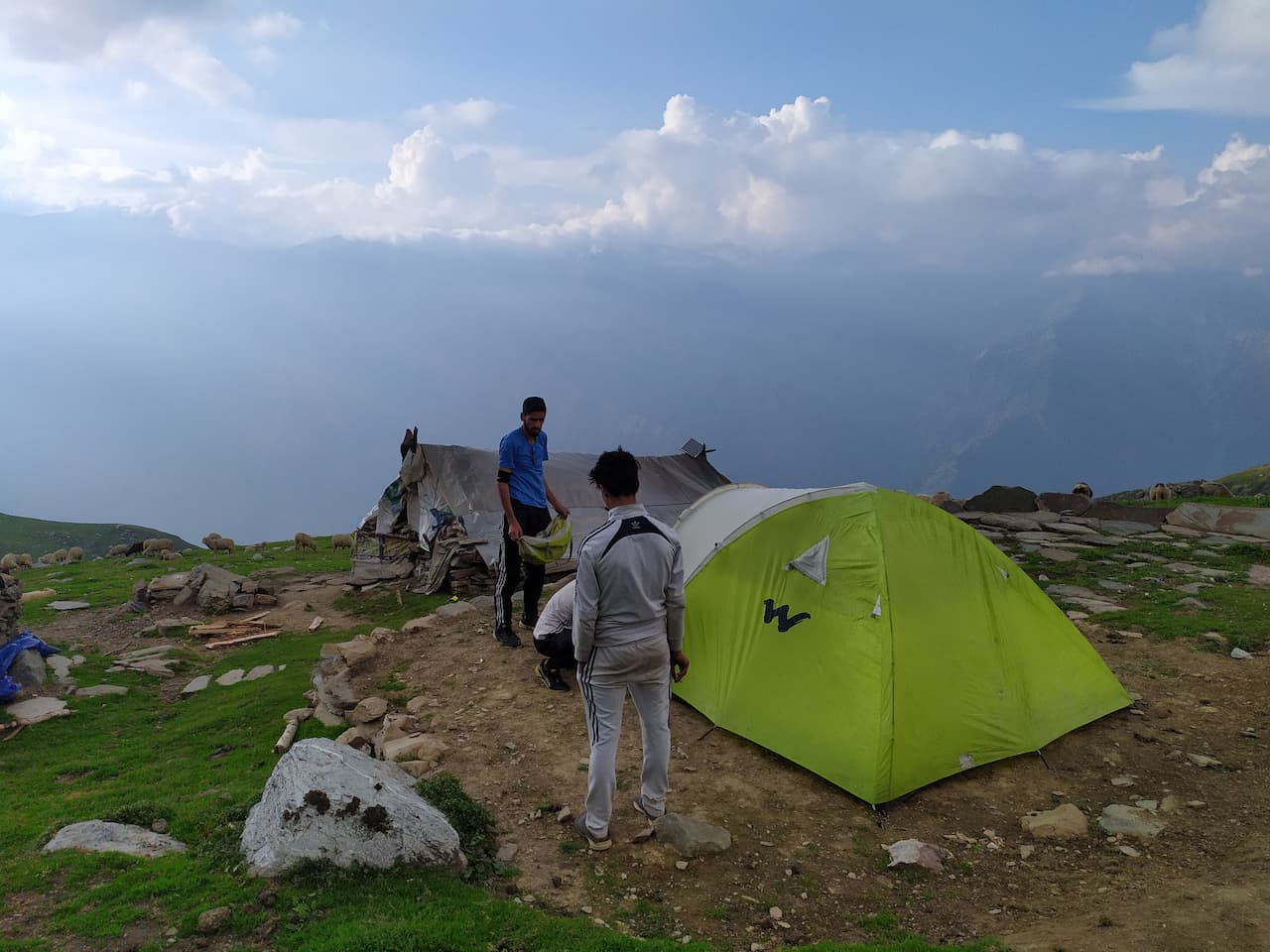
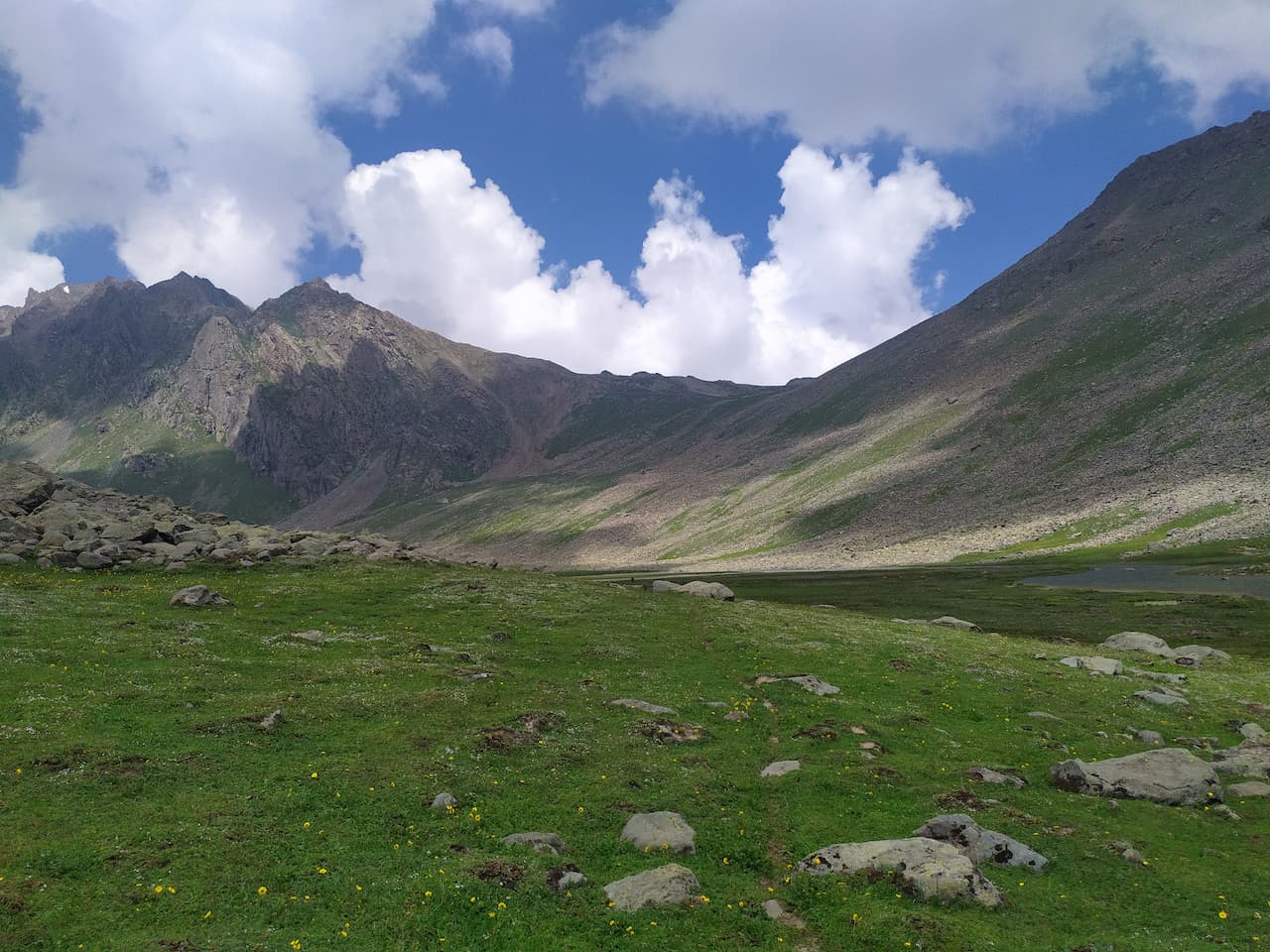
This day starts with a bit of adventure. You’ll cross several icy streams early in the morning, and most trekkers prefer walking barefoot through them. The water is freezing and can numb your feet, but the crossings are short and manageable.Once past the streams, the valley opens up beautifully. Endless meadows stretch out ahead, dotted with wildflowers. The landscape feels wide, quiet, and untouched.After a steady walk, you arrive at Kalapari meadow. This is one of the easiest days of the trek and gives your body some time to recover. The campsite sits beside a clear stream in a calm alpine setting.
Kalapari to Kaintal Valley (The Longest Day)
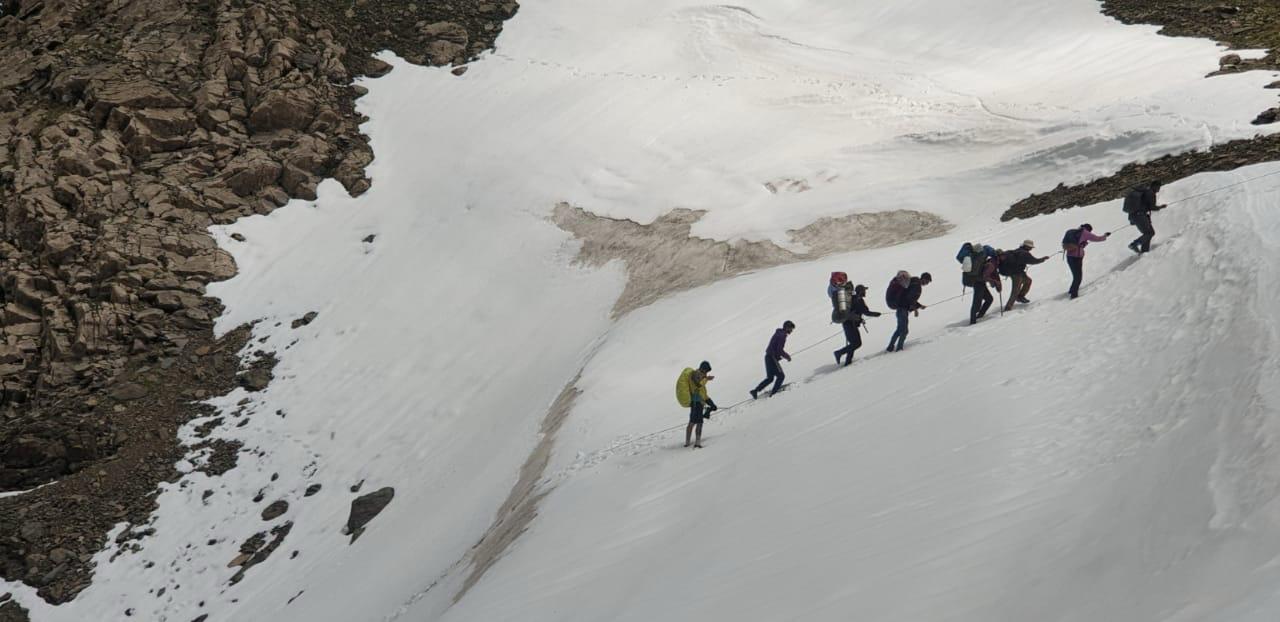
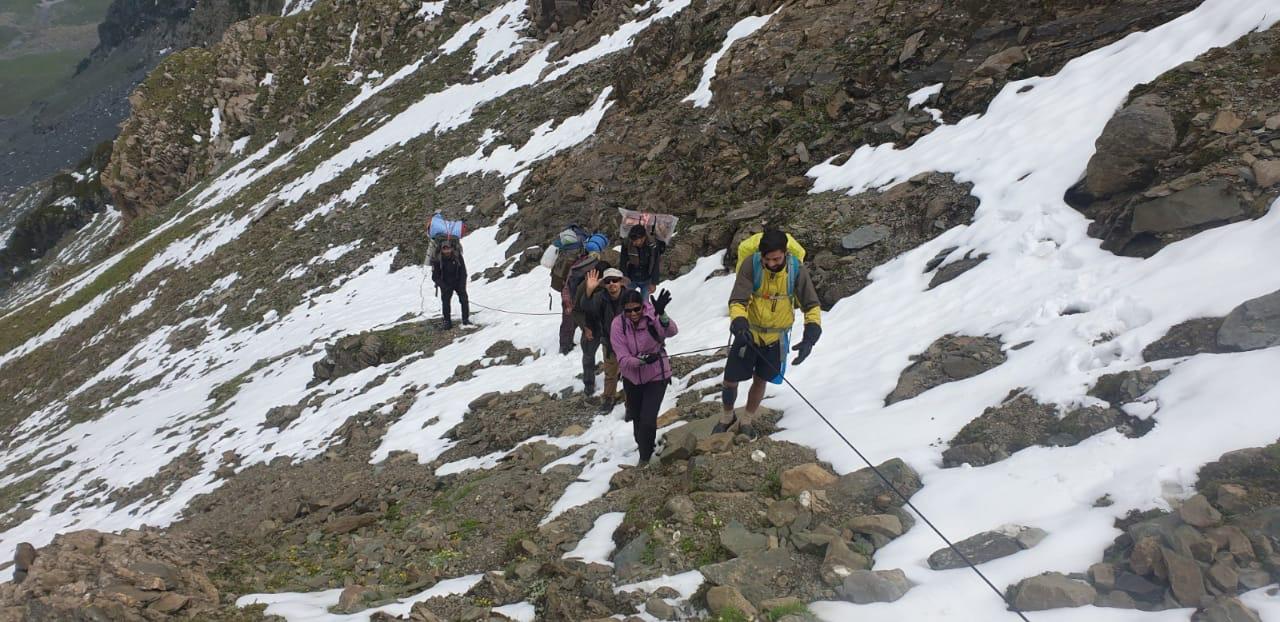
This is the toughest day of the trek, so an early start is important. The terrain becomes more rugged as you walk over rocky moraines and glacial sections.Soon, you begin to see your first glaciers and high-altitude lakes. One of the highlights is a stunning glacial lake with chunks of ice floating in it a surreal sight in the middle of nowhere.You then traverse the Kaintal Glacier. It’s wide but not technical, and careful steps are usually enough. After crossing glacial terrain and climbing steadily, you reach the high pass surrounded by snowfields and partially frozen lakes.The descent from the pass is long and challenging. You move over icy patches and loose rocks before finally entering the vast Kaintal Valley. The campsite here feels incredibly rewarding — wide grasslands surrounded by towering mountains.
Kaintal to Humpet
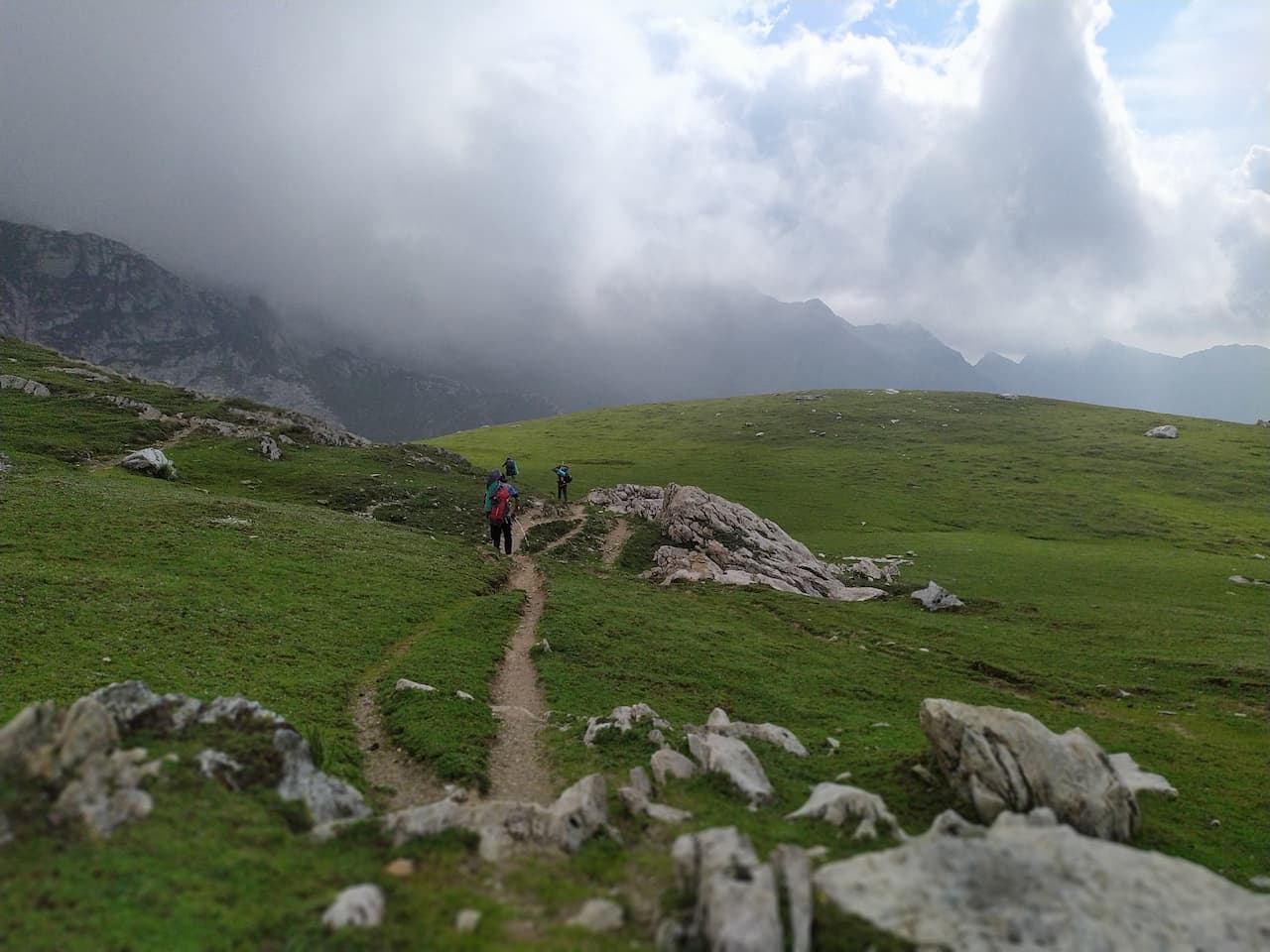
The trail today is full of ups and downs. It follows the river and passes through long meadows where horses are often seen grazing freely. You’ll also cross several shallow streams along the way.There are many small humps on the trail, and each one offers a new view. One memorable stretch is the Sar grassland, a wide and open green expanse that feels endless.As you approach Humpet, the scenery becomes dramatic. From here, you can actually see two different worlds — the lush green mountains of Kashmir on one side and the dry, barren landscapes of Ladakh on the other. It’s a rare and unforgettable contrast.The campsite sits in a peaceful meadow with views of distant shepherd settlements.
Humpet to Sukhnai (Entering Warwan Valley)
Today’s trek is mostly downhill as you move toward Sukhnai in the beautiful Warwan Valley. Along the way, you may notice trails that connect to the famous Amarnath pilgrimage route.he descent passes through scenic grasslands and river junctions where clear streams merge into wider rivers. This is where the untouched beauty of Warwan Valley truly begins.Some parts of the trail are narrow and slightly exposed, so careful walking is important. Gradually, the valley opens up and reveals a breathtaking view of Sukhnai village surrounded by green fields and mountains.The final stretch passes through farms and wooden fences, giving the place a charming countryside feel.
Sukhnai to Basmina (Final Trek Day)
The last day is relaxed and culturally rich. The trail passes through traditional mountain villages while following the beautiful Marwah River.You walk through settlements like Rekenwas and Basmina, where life moves slowly and simply. Wooden homes, grazing animals, and terraced fields define the scenery. Locals are warm and curious, often greeting trekkers with smiles.Basmina is slightly larger than the other villages and has a few small shops and more activity. From here, you drive back toward Srinagar, crossing scenic mountain roads and lush valleys a perfect ending to a truly unforgettable trek.
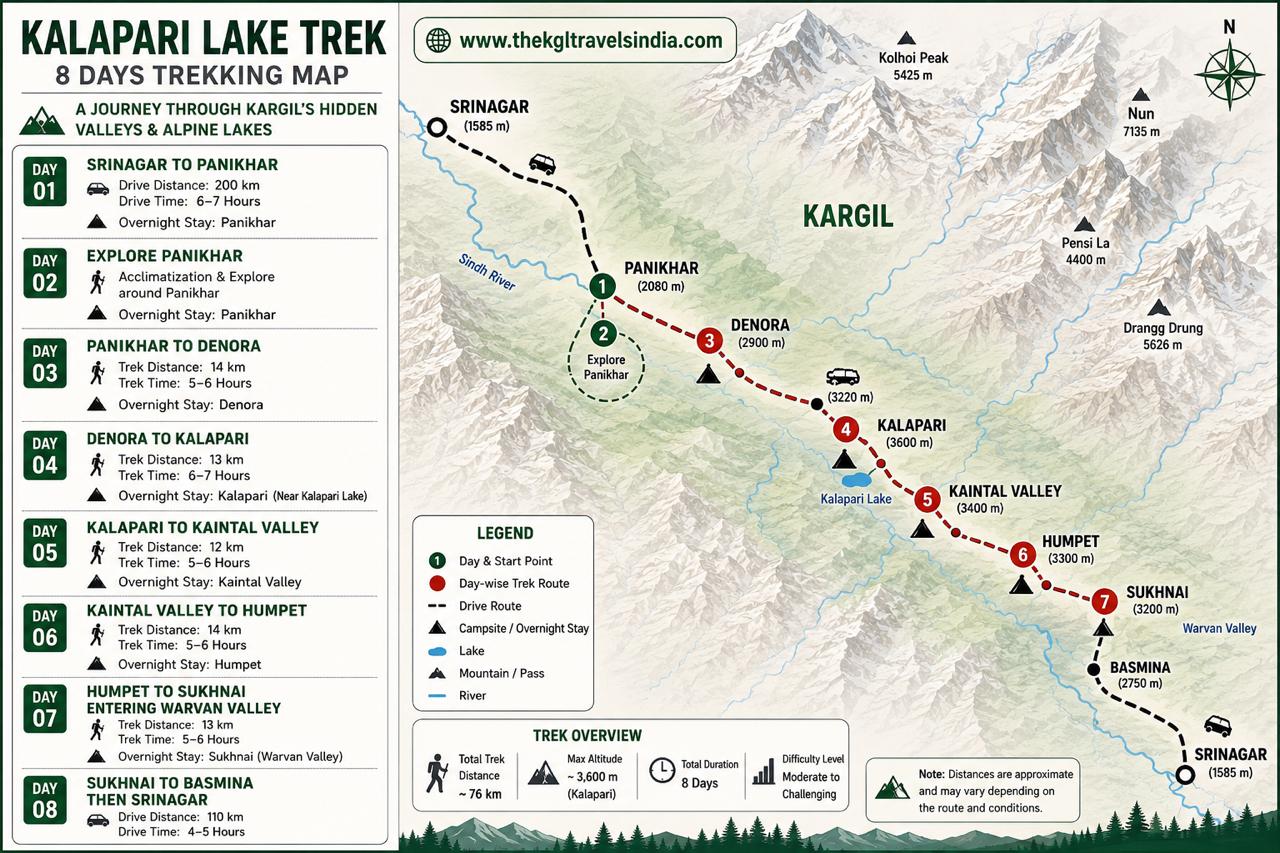
Reaching Srinagar, the heart of Kashmir for Warvan valley trek, is easy with well-connected air, road, and rail options, making it a convenient starting point for most trekking and tour packages.
Warwan Valley is a remote and long trek, so carrying complete essentials is very important.
Warwan Valley is known for its untouched landscapes, glaciers, rivers, and remote Himalayan beauty.
The trek usually takes around 7 to 9 days depending on the route and pace.
This is a moderate to difficult trek suitable for experienced trekkers.
The best time is from July to September when the valley is accessible.
Yes, permits are required and are generally arranged by the trekking company.
No, most parts of the valley have no network connectivity.
Simple and nutritious meals are provided throughout the trek.
Gallery

The Kashmir Great Lakes Travels is a Kashmir based trusted travel and trekking company, focused on showcasing the true beauty of the Northern Himalayas
Contact :
📞 916005642341
📲 917889929400
📧info@thekgltravelsindia.com
Head Office:
Shop no 03 Dar Complex Chatterhama Hazratbal Srinagar Jammu and Kashmir india 190006.
Copyright All Rights Reserved, Design by The Kgl Travels (India)